SMS and RCS vs Sponsored Social Media: Why Direct Messaging Wins for SMEs
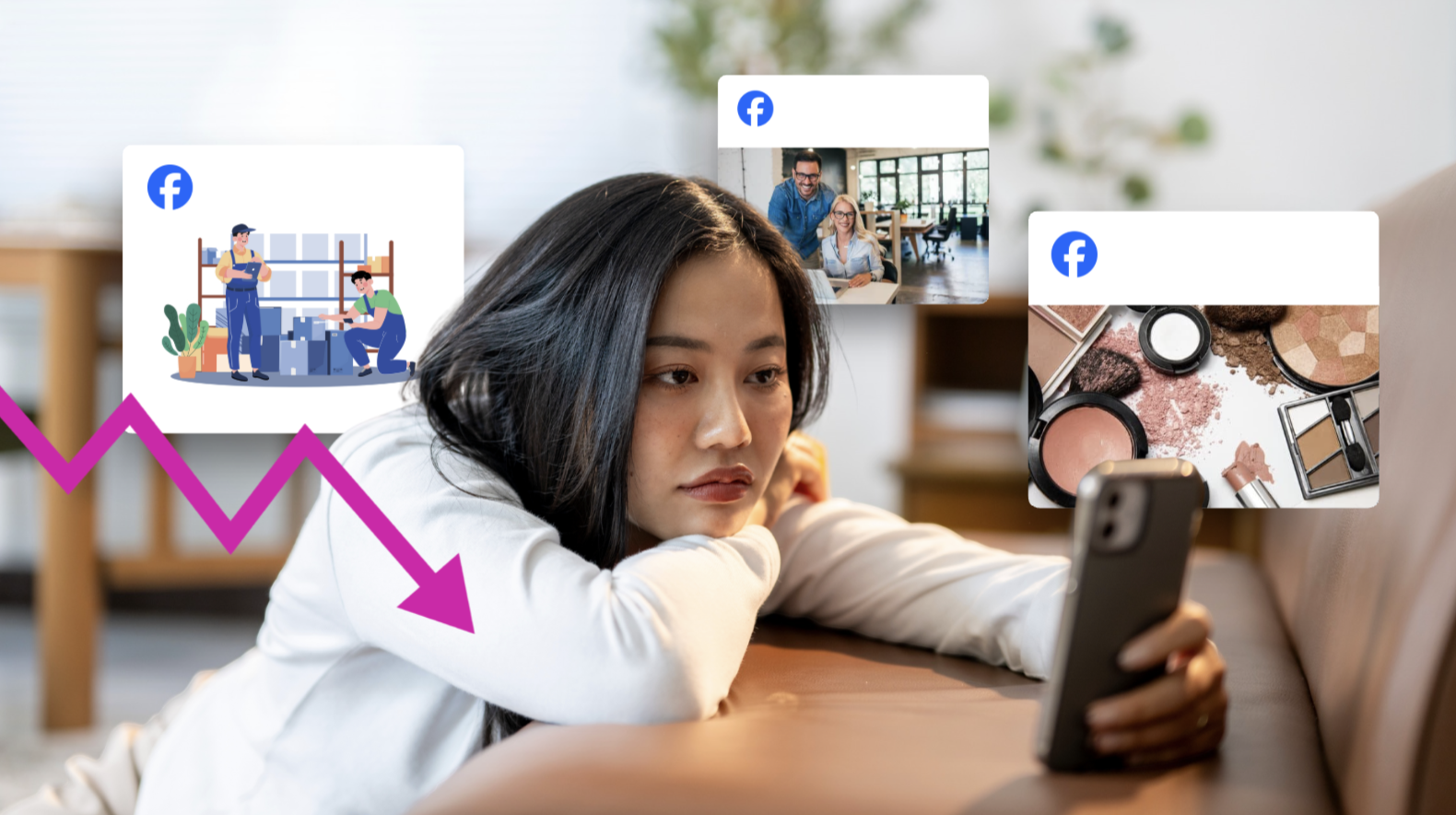
You spend £800 GBP monthly on Facebook ads. Your engagement rate sits at 0.08%. Meanwhile, your competitor sends 500 SMS messages for £60 and gets read by 98% of recipients within three minutes.
This isn't hypothetical. It's happening right now across thousands of UK SMEs.
Social media advertising promises reach. It delivers complexity, competition, and costs that spiral without warning. Direct messaging through SMS and RCS does something different. It reaches people where they actually pay attention.
For small and medium businesses watching every penny, this distinction matters. Social platforms changed their game. Organic reach collapsed. Pay-to-play became mandatory. The average UK SME now commits £600 to £2,000 monthly just to stay visible on social media. That's before considering content creation, management fees, and the reality that most posts vanish into feeds within hours.
SMS vs social media marketing isn't about choosing one forever. It's about understanding which channel delivers results you can measure, afford, and scale. For most SMEs, direct messaging wins on every metric that matters to survival.
Table of Contents
The Real Cost of Social Media Advertising for UK SMEs
Why SMS and RCS Messages Actually Get Read
Trust and Immediacy: Why Customers Prefer Direct Messages
Practical Use Cases Where SMS and RCS Outperform Social Media
When Social Media Still Makes Sense (And When It Doesn't)
Getting Started: Building Your SMS and RCS Strategy
The Numbers Don't Lie: Direct Messaging ROI for SMEs
Common Mistakes SMEs Make With Direct Messaging
Frequently Asked Questions
Why UK SMEs Choose QuickSMS for Direct Messaging
The Real Cost of Social Media Advertising for UK SMEs
Let's talk numbers that actually reflect what you'll pay.
UK small businesses invest between £1,250 and £3,500 monthly for core social media marketing support. That covers basic management, content creation, and some advertising spend. Go full-service with multiple platforms and strategic development? You're looking at £3,500 to £16,750 monthly.
Break that down further:
Management fees alone: £300 to £2,000 per month for an agency to handle your accounts. Basic plans offering three posts weekly start at £45 but realistically cost £200 to £500 for quality execution.
Advertising costs: Facebook clicks run £0.50 to £2.00 each. Instagram costs £0.70 to £2.50 per click. LinkedIn? £2 to £5 per click. CPM (cost per thousand impressions) ranges from £5 to £15 depending on platform.
Content creation: Simple graphics cost £200 to £500. Want video? Budget £1,000 to £5,000 per piece. Copywriting adds £200 to £600 for social media copy.
Here's what kills most SME social strategies: the costs compound. You're paying for management, content, advertising, and analytics simultaneously. Miss any component and the entire effort falls flat.
Compare this with SMS marketing. QuickSMS charges approximately 2-4p per message. Send 1,000 messages? That's £20 to £40. Send 5,000? Still under £200. No management fees required because sending a text message doesn't need design software, content calendars, or algorithm expertise.
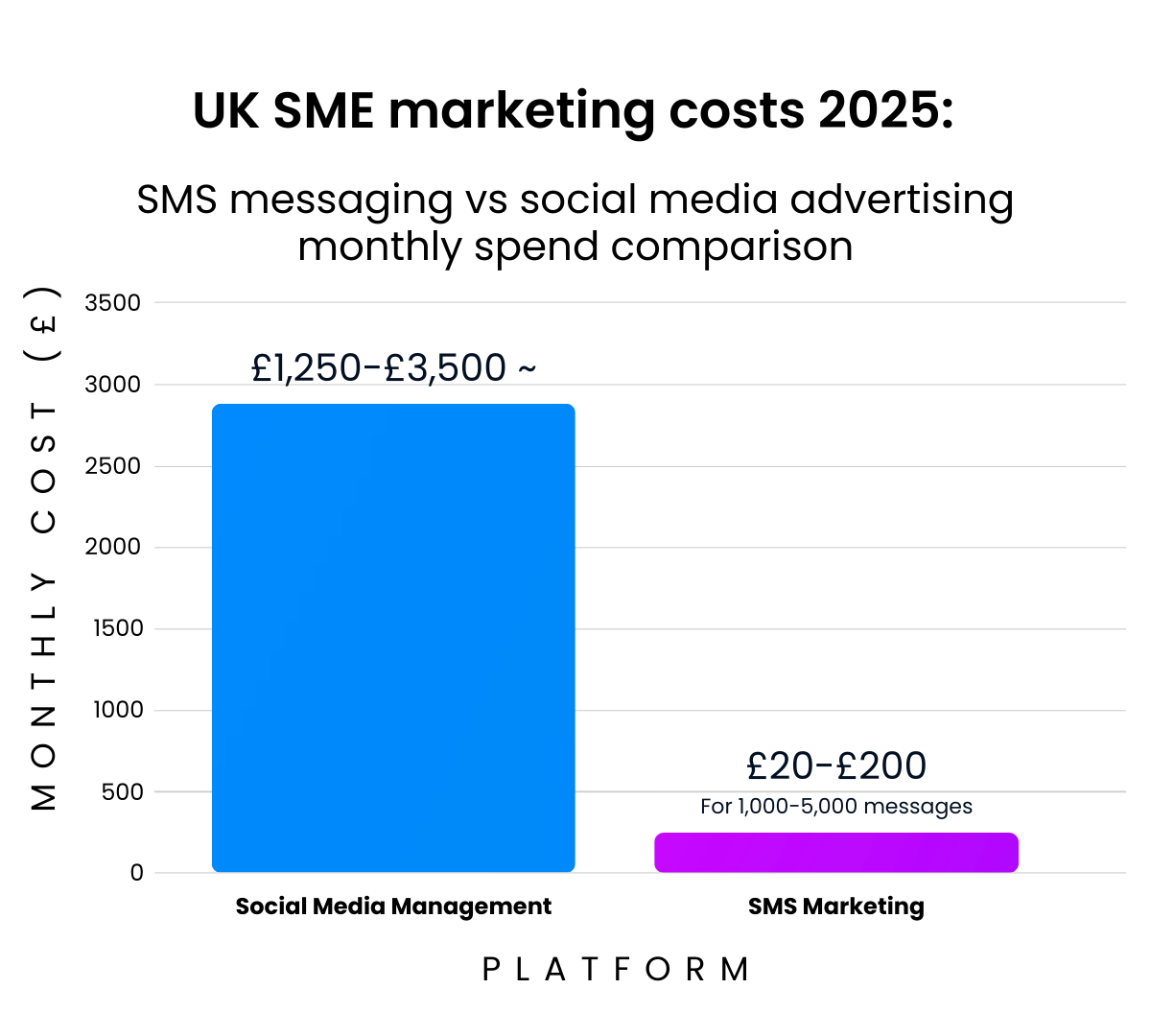
“UK SMEs typically invest between £1,250 and £3,500 monthly for core social media marketing, while SMS campaigns delivering comparable reach cost under £200 monthly.”
The cost effective marketing SME owners actually need isn't hiding behind complex campaigns. It's sitting in the simplest channel that everyone already uses.
Why SMS and RCS Messages Actually Get Read
Social media posts compete for attention. SMS and RCS messages demand it.
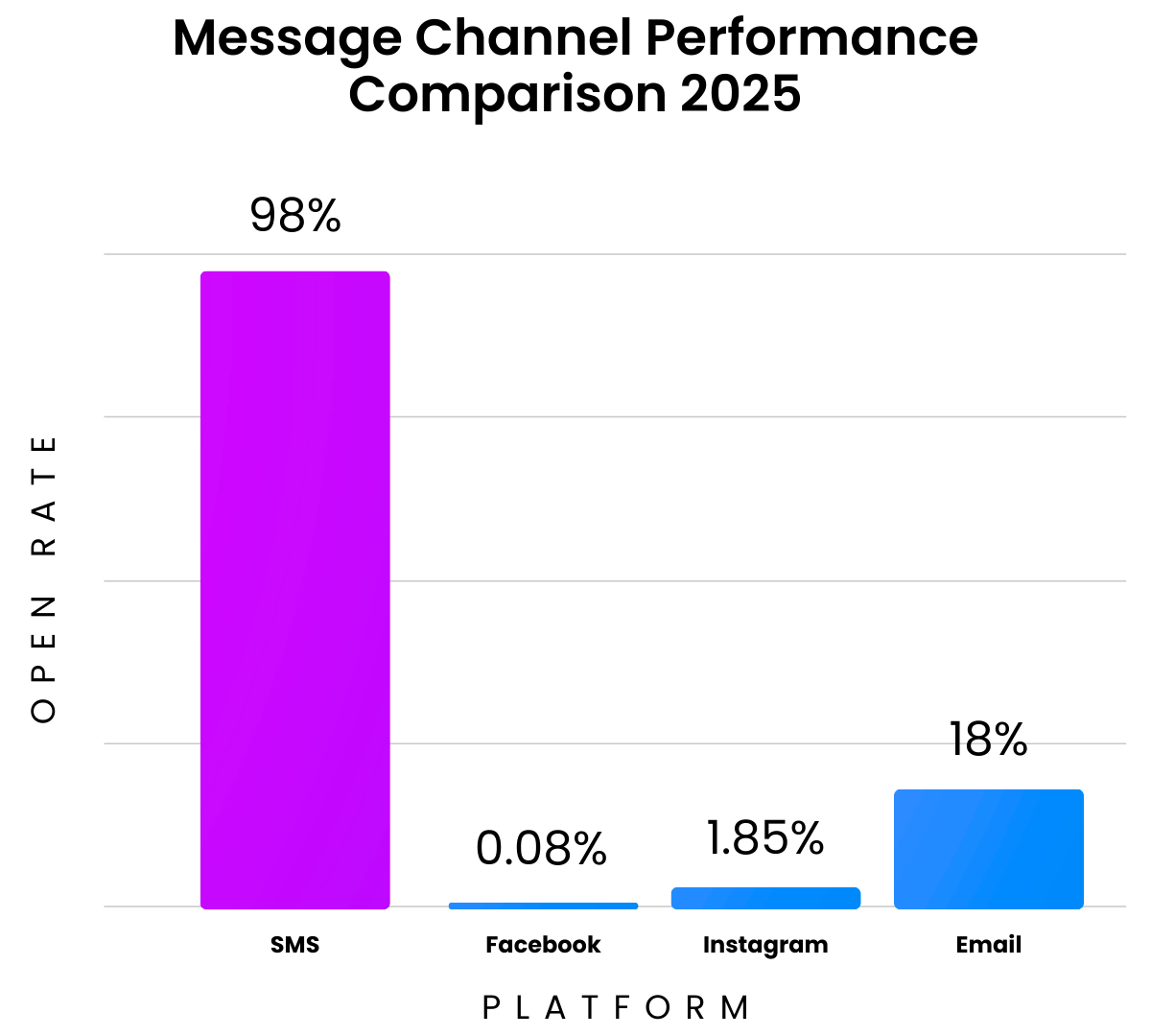
Key Statistic: 98% of text messages get opened within three minutes of receipt, with SMS campaigns achieving 45% response rates – dramatically outperforming social media's 0.08% median engagement rate on Facebook. – Industry Research, 2024-2025
The statistics tell a story that marketing professionals have tried to ignore for years. Compare that to social media's 0.08% median engagement rate on Facebook, or Instagram's 1.85% conversion rate, and the gap becomes obvious.
But why does this happen?
Notification psychology changes everything. When a text arrives, phones vibrate, lock screens light up, and users instinctively check. Social media notifications? They've become white noise. People ignore Facebook pings because most lead nowhere interesting. They don't ignore texts because texts typically mean something personal and immediate.
Response rates prove the point. SMS campaigns achieve 45% response rates. That's not a typo. Almost half of recipients take action. Facebook ads convert at 1.85% for e-commerce. Twitter engagement sits below 1%. LinkedIn does better at around 2%, but you're paying £2 to £5 per click for that privilege.
Timing matters differently. Your Instagram post goes live at 2pm. By 2:30pm, it's buried under fifty other posts in your followers' feeds. An SMS message sits in the inbox until read. It doesn't disappear. It doesn't get pushed down by algorithm changes or competitor spending. It waits.
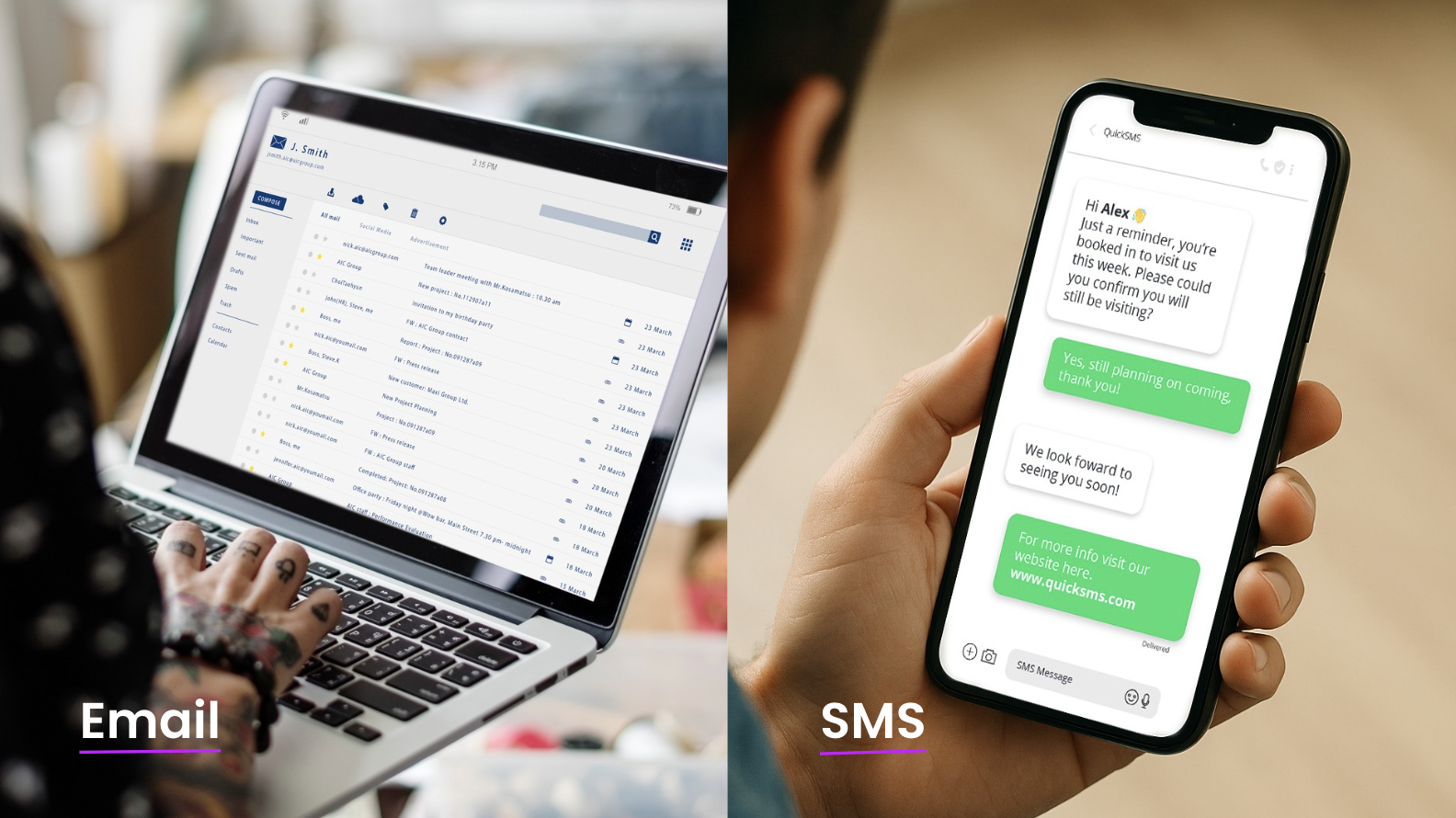
RCS messaging adds another layer to this advantage. Rich Communication Services brings app-like features to text messaging: high-resolution images, video content, interactive buttons, typing indicators, and read receipts. Your brand logo appears at the top of every message. Customers can book appointments, view products, or complete purchases without leaving their messaging app.
The direct messaging ROI calculation becomes simple: pay less, reach more people, get better results. SMS and RCS don't rely on algorithms favouring your content. They bypass that entirely.
Trust and Immediacy: Why Customers Prefer Direct Messages
Social media breeds scepticism. Direct messaging builds confidence.
When someone shares their mobile number with your business, that's permission. Explicit, deliberate permission to reach them directly. They don't give that lightly. Contrast this with social media followers who click "follow" for a competition entry or because they saw one interesting post months ago.
This permission gap translates to trust gaps. Recipients trust SMS messages from known businesses because texts have historically been personal, verified communications. Your bank sends alerts via SMS. NHS appointments arrive via text. Government services use SMS for critical updates. That context matters.
Social media advertising fights different battles. Fake news damaged platform credibility. Algorithm manipulation created distrust. Influencer scandals made people question authenticity. Users scroll social feeds expecting marketing manipulation. They read text messages expecting legitimate information.
Immediacy amplifies this trust advantage. GP practices send appointment reminders via SMS because patients check texts immediately. A Facebook message about tomorrow's appointment might never get seen. The urgency of direct messaging aligns with business needs requiring prompt action.
“Studies show that 86% of consumers made two or more purchases in the previous year directly from branded text messages. RCS messages achieve a 50% open rate within the first 15 seconds and a 2.5x higher conversion rate than SMS.
”
RCS takes this further with verified sender information. Your business logo and name appear automatically, reducing phishing concerns and increasing engagement.
Customer service exemplifies the immediacy difference. Social media customer support requires customers to navigate to your page, find messaging options, and wait for responses during business hours. SMS enables instant two-way conversations. RCS adds typing indicators so customers know you're responding in real-time.
For SMEs, this creates service advantages larger competitors can't easily replicate. You respond faster. Customers feel valued. Loyalty builds from consistent, immediate attention that social media's complexity makes nearly impossible to maintain.
Practical Use Cases Where SMS and RCS Outperform Social Media
Theory matters less than application. Here's where direct messaging destroys social media performance for specific business needs.
Appointment Reminders and Confirmations
Beauty salons, dental practices, and service businesses lose thousands annually to no-shows. A Facebook post reminding someone about Tuesday's haircut? Invisible. An SMS reminder 24 hours before? Read within minutes, reducing no-shows by up to 70%.
RCS improves this further. Send appointment confirmations with interactive buttons: "Confirm," "Reschedule," or "Add to Calendar." Customers take action instantly. Your booking system updates automatically. No phone calls required.
“We were spending £400 monthly on Facebook ads with minimal bookings. Switched to QuickSMS appointment reminders and spent £35 monthly reaching every client. No-shows dropped by 65%. Our revenue increased £2,800 in the first month alone.
”
Cost comparison: Running social media ads to remind customers about appointments costs £100+ monthly for limited reach. Sending 500 SMS reminders costs £10 to £20. The ROI isn't close.
Flash Sales and Time-Sensitive Offers
Restaurants with empty tables at 6pm need to fill them by 7pm. Retailers with excess stock need to move inventory today. Social media algorithms might show your post to 2% of followers, possibly hours after you post it.
SMS reaches 98% of your database within minutes. "50% off all bookings tonight - text BOOK to reserve" generates immediate response. Your phone starts ringing. Tables fill. Stock moves.
Order Updates and Delivery Notifications
E-commerce businesses live and die on customer experience. Social media can't tell customers their parcel ships tomorrow. SMS handles this perfectly: "Your order #12345 dispatched today via Royal Mail. Track:"
RCS enhances order tracking with rich cards showing product images, delivery progress bars, and driver locations. Customers tap through without leaving their messages. This creates app-level experience without requiring app downloads.
Customer Feedback and Reviews
Getting reviews determines online visibility. Social media requests for reviews get ignored because asking feels forced in public feeds. SMS requests feel personal: "Hi Sarah, thanks for visiting today. Would you mind sharing feedback?"
Response rates for SMS feedback requests hit 30-40%. Social media review requests struggle to break 5%. The directness and privacy of messaging makes customers more willing to provide honest feedback.
Abandoned Cart Recovery
E-commerce stores lose 70% of potential sales to abandoned carts. Email cart recovery converts at 8-10%. SMS cart recovery converts at 25-30%. "You left something behind! Complete your order now and save 10%:"
Real Results: A UK-based outdoor clothing retailer using QuickSMS for cart abandonment saw 28% of abandoned carts recovered through SMS (224 sales monthly), generating an additional £16,800 in revenue from a £160 monthly SMS spend – a 10,400% ROI that their previous email campaigns couldn't match.
RCS lets customers see their abandoned products as image carousels within the message. One tap returns them to checkout with items still in basket. This removes friction that email creates.
Event Promotion and Ticket Distribution
Promoting events on social media reaches your existing followers (maybe). Promoting via SMS reaches everyone who expressed interest. Send event details, venue information, and digital tickets directly to attendees.
RCS makes this seamless with location data, calendar integration, and QR code tickets embedded in messages. Attendees have everything needed in one place. No app downloads. No searching through email folders.
When Social Media Still Makes Sense (And When It Doesn't)
Direct messaging wins on conversion and immediate response. Social media serves different purposes that SMEs shouldn't ignore entirely.
Social media excels at brand discovery. Someone searching for "best coffee shops Edinburgh" finds your Instagram. Your content style tells them whether they'd enjoy visiting. That discovery process suits social platforms because people browse intentionally.
Community building happens naturally on social. A local bookshop creates a Facebook group where readers discuss monthly picks. That community engagement builds loyalty impossible to replicate via SMS. People want public conversation for some interactions.
Visual storytelling needs social platforms. Interior designers showcasing room transformations need Instagram's visual format. Fashion retailers demonstrating styling ideas need Pinterest. These use cases leverage social media's strengths.
However, social media fails SMEs when used for:
Direct sales conversion: Trying to sell products through organic social posts wastes time. Algorithm changes killed organic reach. You're posting to 2% of your followers unless you pay.
Urgent communications: Social posts about closing early today or limited stock won't reach customers in time. Algorithms don't prioritise timeliness.
Personalised messaging: Social media operates in public or semi-public spaces. Personalised offers feel awkward and obvious. SMS naturally suits one-to-one communication.
Measurable ROI: Tracking social media's actual contribution to revenue remains difficult. Did that Instagram post drive yesterday's sale? Maybe. SMS click-through rates and conversion tracking provide definitive answers.
The smart approach combines both strategically. Use social media for brand awareness and discovery. Use SMS and RCS for conversion, retention, and customer service. Don't expect social media to do jobs it's unsuited for.
Getting Started: Building Your SMS and RCS Strategy
Most SMEs hesitate because they don't know where to start. The technical barriers seem high. They're not.
Step 1: Build Your Database Legally
UK regulations require explicit consent before sending commercial SMS messages. This isn't optional. GDPR enforcement has teeth.
Collect numbers through:
Website signup forms with clear consent language
In-store competitions or loyalty programmes
Email signature links to SMS signup pages
Point-of-sale checkout prompts
Never purchase number lists. Never assume consent. Always provide easy opt-out options. QuickSMS handles compliance requirements automatically, but you need to collect permissions correctly.
Step 2: Choose the Right Platform
Look for providers offering:
UK-based support and data storage
GDPR compliance built-in
Two-way messaging capabilities
Delivery reporting
Integration with existing systems (booking software, CRM, e-commerce platforms)
QuickSMS specialises in UK businesses and integrates with major platforms including Shopify, WordPress, and popular booking systems. Pricing remains transparent: pay per message without hidden management fees.
Step 3: Start Simple, Scale Smart
Don't launch with complex campaigns. Begin with proven use cases:
Appointment reminders (if applicable)
Order confirmations and delivery updates
Welcome messages for new customers
Birthday or anniversary messages with small offers
Measure response rates. Track conversions. Adjust messaging based on what works. SMS provides clear data showing exactly which campaigns drive results.
Step 4: Consider RCS When Ready
RCS requires slightly more setup than SMS but offers substantial advantages for specific use cases. Best candidates for RCS include:
Businesses sending product catalogues or menus
Service providers needing appointment scheduling
E-commerce stores wanting rich product displays
Brands emphasising visual identity
RCS coverage reaches over 1.5 billion users globally and growing. Apple's iOS 18 adoption adds roughly 1 billion users by mid-2025. The network effects make RCS increasingly viable for UK SMEs.
Step 5: Integrate with Social Media Strategically
Use social media to grow your SMS database. Run competitions requiring SMS signup. Share exclusive offers available only to SMS subscribers. Create fear of missing out that drives people from social to your direct messaging list.
This approach flips the typical model. Instead of hoping social media followers buy something, you convert them into SMS subscribers who actually respond to offers. Your marketing becomes channel-independent and algorithm-proof.
Ready to calculate your potential savings? Use our free SMS vs Social Media ROI Calculator to see exactly how much your business could save by switching to direct messaging. Compare your current social media spend against SMS costs with real scenarios tailored to your industry.
Let's make this concrete with realistic scenarios.
Scenario 1: Beauty Salon
Current social media spend: £400 monthly (management + ads)
Followers: 2,000
Typical post reach: 40 people (2%)
Monthly bookings from social: 8-12
Switch to SMS:
Database: 800 customers who've visited before
Monthly SMS spend: £50 (1,000 messages)
Reach: 784 opens (98%)
Monthly bookings from SMS: 120-160
Cost per booking drops from £33-£50 (social) to £0.31-£0.42 (SMS). The salon saves £350 monthly while tripling bookings.
Scenario 2: Local Restaurant
Current social media spend: £600 monthly
Instagram followers: 3,500
Average post engagement: 105 likes, 12 comments
Measurable revenue attribution: difficult
Add SMS:
Database: 1,200 regular customers
Monthly SMS spend: £80 (special offers, events)
Response rate: 45% (540 customers)
Average spend increase: 18% among SMS recipients
The restaurant keeps social media for discovery but attributes £3,000+ monthly revenue directly to SMS campaigns costing £80.
Scenario 3: E-commerce SME
Current paid social: £1,200 monthly
Conversion rate: 1.85%
Cost per acquisition: £45
Monthly customers: 26-27
Add SMS for cart abandonment:
Monthly abandoned carts: 800
SMS recovery campaigns: £160 (4,000 messages)
Conversion rate: 28% (224 recovered sales)
Average order value: £75
SMS generates £16,800 revenue from £160 spend. That's 10,400% ROI.
| Business Type | Monthly Marketing Spend | Average Customers Reached | Conversions | Cost per Customer | Monthly Revenue Generated | ROI vs Social Media |
|---|---|---|---|---|---|---|
| Beauty Salon (appointments) | Social: £1,500 → SMS: £150 | 5,000 → 3,000 | 1.5% → 8% | £20 → £1.87 | £900 → £2,400 | +167% ROI |
| Restaurant (table bookings) | Social: £1,250 → SMS: £200 | 6,000 → 4,000 | 0.8% → 10% | £26 → £0.50 | £1,000 → £4,000 | +300% ROI |
| E-commerce (online shop) | Social: £3,000 → SMS: £200 | 15,000 → 8,000 | 1.2% → 6% | £17 → £0.42 | £2,100 → £4,800 | +128% ROI |
[Infographic: Three ROI Scenario Comparison - Visual showing Beauty Salon, Restaurant, and E commerce ROI calculations with before/after metrics. Include cost per booking/customer calculations. Alt text: "SMS marketing ROI scenarios for UK SMEs showing cost savings vs social media advertising"]
These aren't aspirational figures. They reflect typical performance for SMEs implementing direct messaging properly.
Common Mistakes SMEs Make With Direct Messaging
Success isn't automatic. These mistakes kill SMS and RCS campaigns before they start:
Sending too frequently. SMS feels intrusive when overused. Two to four messages monthly works for most businesses. Daily messages drive opt-outs.
No clear call to action. "20% off this weekend" tells customers nothing about how to claim the offer. "Reply SALE for 20% off code" drives action.
Ignoring opt-outs immediately. UK regulations require immediate opt-out processing. Send one more message after opt-out and you're breaking the law. QuickSMS handles this automatically.
Generic, boring messages. SMS requires brevity, not boring. "Your appointment is Tuesday at 2pm" works fine. "Hi Sarah! Excited to see you Tuesday 2pm for your colour refresh. Reply YES to confirm or RESCHEDULE to change" performs better.
Forgetting personalisation. Including first names increases response rates by 15-20%. Your platform should handle this automatically.
Not measuring results. Track everything: delivery rates, open rates, click-through rates, conversion rates. SMS provides clearer data than social media ever will.
Treating SMS like social media. They're different channels requiring different approaches. Don't post social media content to SMS. Write concise, action-focused messages suited to the medium.
Frequently Asked Questions
-
UK SMS providers charge 2-4p per message for standard SMS, with volume discounts available. A business sending 1,000 messages monthly pays £20-£40. There are no platform fees with many providers including QuickSMS, making it substantially cheaper than social media advertising which costs £600-£2,000 monthly for comparable reach.
-
Research shows 70% of customers agree SMS is an excellent way for businesses to get their attention. The 98% open rate within three minutes demonstrates this preference through action rather than surveys. Customers particularly appreciate SMS for appointment reminders, delivery updates, and time-sensitive offers where immediacy matters.
-
SMS sends text-only messages limited to 160 characters. RCS (Rich Communication Services) adds high resolution images, videos, interactive buttons, brand verification, and read receipts directly in the native messaging app. SMS works universally across all phones. RCS requires compatible devices but now reaches over 1.5 billion users globally including iOS 18 users. Start with SMS, add RCS for visually-driven campaigns as your strategy matures.
-
UK law requires explicit, informed consent before sending commercial messages. Customers must opt-in deliberately, understanding they'll receive marketing messages. Collect consent through website forms, in-store signup sheets, or checkout processes with clear language. Never purchase number lists or assume consent. Always provide easy opt-out options in every message. GDPR compliance isn't optional.
-
Most UK SMEs find success with 2-4 messages monthly. Restaurants might send weekly lunch specials. Retailers might message during sales periods only. Service businesses might stick to appointment reminders plus occasional offers. The golden rule: every message must provide clear value. If customers can't immediately see why receiving your message benefits them, you're sending too often or with wrong content.
-
Absolutely. In fact, SMS often works better with older demographics who may use social media less frequently. UK adults aged 55+ have 95% mobile phone adoption and check texts regularly. They're less likely to use Instagram or TikTok but reliably read text messages. Appointment reminders, health updates, and service confirmations via SMS suit older customers particularly well.
-
Track delivery rate (percentage of messages successfully sent), open rate (typically 98% for SMS), click through rate if including links, conversion rate (actions taken after receiving messages), and opt-out rate (should stay below 2%). Compare cost per conversion between SMS and other channels. QuickSMS provides detailed reporting showing exactly which campaigns drive results.
Why UK SMEs Choose QuickSMS for Direct Messaging
Making the switch from social media dependency to direct messaging control requires the right partner.
QuickSMS specialises in UK small and medium businesses navigating exactly this transition. We're not a generic global platform treating UK regulations as an afterthought. We're UK-based, handling GDPR compliance, NHS procurement frameworks, and the specific needs of British businesses as our core focus.
ISO 27001 certification means your customer data receives enterprise-level security without enterprise complexity. Government and NHS organisations trust QuickSMS because we meet their stringent requirements while remaining accessible to micro businesses.
Transparent pricing removes the guesswork killing most SME marketing budgets. Pay per message sent. No hidden platform fees. No minimum monthly commitments for smaller businesses. Scale spending with results rather than hoping social media ads eventually work.
Integration capabilities mean QuickSMS works with the systems you already use: Shopify, WordPress, major booking platforms, and CRM systems. Messages send automatically when events occur rather than requiring manual campaign management.
UK-based support answers questions during your business hours from people who understand UK business challenges. No overseas call centres struggling with regional context.
Moving beyond social media algorithm dependency doesn't mean abandoning online marketing. It means controlling your customer communication through channels that work reliably, cost predictably, and deliver measurable results.
Ready to compare your actual social media ROI against SMS performance? QuickSMS offers trial accounts letting you test direct messaging with your real customer database before committing budget.
The SMEs winning in 2025 aren't those spending most on social media. They're the ones spending smart on channels customers actually use.